We change what young people believe is possible.



Why Ages 13–21 Are the Most Fragile and Most Powerful Phase in a Student’s Life
Much of the conversation around education focuses on beginnings. Early childhood, primary school enrolment, foundational literacy—these stages rightly receive attention, funding, and urgency. At the other end, adulthood is treated as a moment of accountability, when individuals are expected to make choices, earn livelihoods, and shape their futures.
But between these two points lies a stretch of years that quietly determines everything that follows.
Between the ages of 13 and 21, young people undergo the most significant transitions of their lives. They move from guided learning to self-direction, from certainty to questioning, from being protected to being expected to cope. These are the years when confidence forms, ambitions crystallize, and self-belief either strengthens—or fractures.
And yet, they are also powerful.
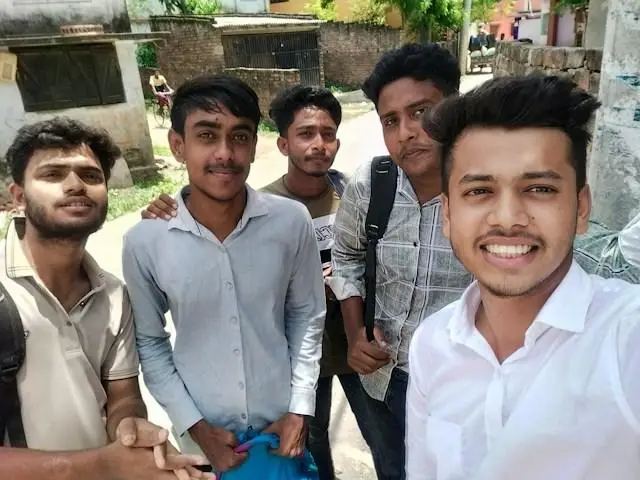
The adolescent and young adult years are often described as a bridge—an in-between phase, something to be endured until “real life” begins. But for many students, particularly those without safety nets, this period is not a pause between chapters. It is the chapter that decides the entire story.
Cognitively, students begin to think abstractly, question assumptions, and imagine futures. Emotionally, they become more self-aware, more sensitive to comparison, and more vulnerable to failure. Socially, expectations change: decisions begin to carry consequences.
A student who struggles in these years does not simply fall behind academically. They often lose confidence, direction, and the belief that effort will lead somewhere meaningful.
For students with access to resources, guidance, and exposure, missteps are recoverable. For those without, the margin for error is far smaller.
Across India, school attendance through early grades has improved significantly. Classrooms are fuller, and enrolment numbers tell a story of progress. Yet many educators and community workers observe a troubling pattern: academically capable students begin to disengage, falter, or disappear during adolescence.
The reasons are rarely dramatic.
School fees increase. Transportation becomes expensive. Family responsibilities grow heavier. A health emergency, a job loss, or caregiving duty interrupts learning. Academic gaps that once felt manageable begin to widen. A student who struggled quietly in mathematics or reading earlier now finds the curriculum unforgiving.
Often, there is no single moment of failure—just a slow accumulation of obstacles.
By the time students reach higher secondary school or complete Class 10 or 12, many stand at a crossroads without clarity. College feels unattainable. Vocational pathways are poorly understood. Employment feels urgent but unfulfilling. Without guidance, confusion is mistaken for disinterest, and potential quietly slips away.
Between ages 15 and 18, the nature of education itself changes. Learning is no longer only about understanding subjects—it becomes about making decisions.
Students are asked to choose streams, courses, exams, and futures, often without context or support. For first-generation learners, these choices feel especially daunting. They may excel academically yet lack exposure to careers, institutions, or pathways that peers from more privileged backgrounds take for granted.
Questions arise that schools are rarely equipped to answer:
Without guidance, fear begins to replace curiosity. Many students opt for what feels safest—or opt out altogether.
This is not a lack of ambition. It is a lack of maps.
Perhaps the most profound loss during these years is not academic—it is emotional.
Confidence erodes subtly. A student who once participated actively begins to withdraw. Comparisons with peers deepen feelings of inadequacy. Setbacks, when unsupported, start to feel like proof of limitation rather than part of learning.
Over time, students internalize narratives they never chose: “I’m not good at this,” “People like me don’t go there,” “I should be practical.”
By late adolescence, many capable young people stop imagining themselves in certain spaces altogether—not because they lack ability, but because no one helped them believe they belonged.
Confidence, once lost, is difficult to rebuild without intentional support.
Support during ages 13–21 cannot be transactional or short-lived. These are years that demand continuity.
True support means:
Financial assistance matters. Academic tutoring matters. But without emotional safety and direction, these alone are insufficient.
Young people need adults and communities that do not disappear once a milestone is reached. They need reassurance that setbacks are survivable and that growth is possible even when progress is uneven.
This is where long-term, community-rooted initiatives play a critical role.
When support is embedded within a community, it becomes more than a program—it becomes a relationship.
Community-led initiatives understand local realities. They recognize family pressures, cultural expectations, and the lived experiences that shape a student’s choices. Mentors are accessible, familiar, and trusted. Guidance feels personal, not institutional.
This consistency builds something essential: trust.
Students who trust their support systems are more likely to ask questions, admit confusion, and persist through difficulty. They feel seen not as beneficiaries, but as individuals with potential worth investing in.
Support a Dream is rooted in this philosophy. By walking alongside students during their most uncertain years—academically, emotionally, and socially—we help them remain engaged with learning and confident in their ability to navigate choices.
The impact of supporting a young person during these years extends far beyond the individual.
A student who stays in school influences siblings who follow. A young adult who gains direction shifts family expectations. Confidence becomes visible, and aspiration begins to feel achievable for others in the community.
This consistency builds something essential: trust.
Progress multiplies quietly. When young people are supported through critical years, they do not merely complete education—they carry forward a belief in possibility that reshapes how communities view learning, effort, and future planning.
Ages 13–21 decide more than academic results. They shape identity, resilience, and the courage to imagine a future.
When students are supported during these years, they learn that uncertainty does not mean failure, and that effort, when sustained, leads somewhere meaningful. They develop the confidence to make choices—not because success is guaranteed, but because support makes risk survivable.
At Support a Dream, we believe that dreams do not need rescuing. They need consistency, guidance, and time.
By standing with young people during the years that matter most, we help ensure that potential is not lost to circumstance—and that effort, resilience, and ambition are allowed to grow into something lasting.
Because when we invest in these fragile, powerful years, we do more than change trajectories.
We change what young people believe is possible.
Your support helps build futures rooted in dignity, care, and opportunity for every learner.
Why millions of children in India don't get the chance to excel — and what that costs everyone.
Read more
Our newsletter — stories, progress, and what we're learning.