We invite you to walk alongside us as we create these opportunities that turn potential into possibility — and possibility into a life transformed.



Why Millions of Children in India Don’t Get the Chance to Excel
For years, India has been celebrated as one of the world’s youngest nations — a country where millions of children step into school each morning, carrying dreams bigger than the spaces they inhabit. Classrooms across the country are full, attendance rates are rising, and new schools continue to open each year. On paper, the future looks promising.
And yet, beneath this encouraging picture lies a quieter and far more complex truth: opportunity does not reach every child in the same way.
Many children enter school with the same curiosity, the same spark, and the same inherent desire to learn, but not all leave with the same foundations, the same exposure, or the same chance to grow into their potential. That subtle difference — the difference in opportunity — becomes the defining thread that shapes confidence, influences choices, and ultimately determines the arc of a life long before adulthood arrives.
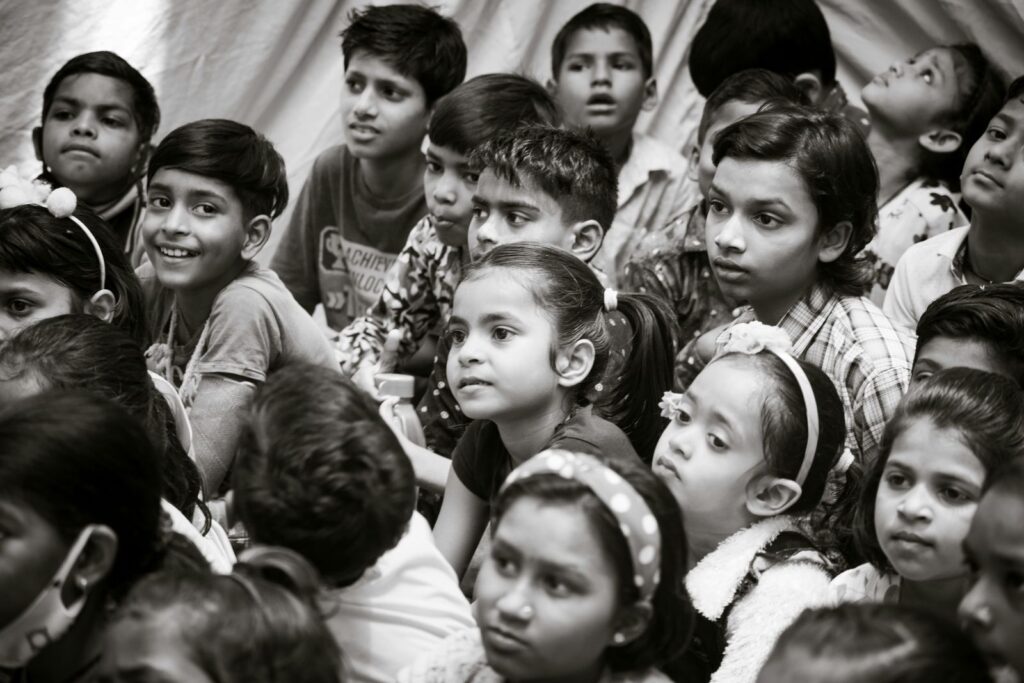
Evidence of this divide has grown increasingly clear. UNICEF estimates that nearly 50 million primary-school-aged children in India are not achieving grade-level proficiency, despite regular attendance. The UNESCO Global Education Monitoring Report echoes this concern, noting that while India has significantly improved school access, the gap between being in school and learning well continues to persist. A joint World Bank–UNESCO brief highlights that 56% of children at late-primary age do not meet minimum proficiency in reading — a foundational skill upon which all later learning depends.
Opportunity rarely disappears in dramatic ways. More often, it slips away softly, in moments that pass unnoticed unless someone is paying close attention.
In a typical classroom, you might find a child who lingers on a sentence long after others have begun writing their answers. Nearby, another child repeatedly erases a math problem, hoping the numbers will make more sense on the third try. A third listens intently yet returns home with no way to practise what was taught—no books, no supportive adult, no quiet space to revise.
None of this signals a lack of interest. It signals a lack of reinforcement.
Teachers across India work with extraordinary dedication, yet many manage large classrooms where the pace must match the curriculum, not learning abilities of individual students. A child who needs a slower explanation simply doesn’t get one. A student who struggles with multiplication in Grade 2 may continue carrying that gap silently through Grade 3, Grade 4, and beyond. Early hesitation becomes growing uncertainty, and by adolescence, that uncertainty becomes self-belief—“math isn’t for me,” “I’m not good at reading,” “my future is probably limited.”
These beliefs do not arise from a lack of ability. They arise from opportunity that did not arrive when children needed it most.
The emotional cost is perhaps the hardest to measure. A child who struggles academically often becomes quieter over time, lifting their hand less frequently, avoiding tasks they once approached with enthusiasm, gradually narrowing their ambitions because they believe excellence belongs to someone else. These shifts happen quietly, yet they shape the child’s entire experience of school and, eventually, their outlook on life.
But there is hope in these stories. Opportunity is not random; it can be created with intention, care, and consistency.
Opportunity begins with strengthening foundational learning. When children receive targeted support in reading fluency, comprehension, number sense, and early problem-solving, the fog that once clouded learning begins to lift. Lessons become clearer. Participation becomes easier. Confidence returns.
Opportunity is also about exposure. A child discovering storybooks for the first time, participating in a reading circle, joining a small science discussion, or receiving their first set of learning materials experiences a kind of widening—a sense that the world is larger and more accessible than they previously believed.
Yet mentorship is often the most powerful form of opportunity. A mentor who sits beside a child, listens to their questions, breaks a concept down gently, and assures them that their struggles are normal can alter a child’s relationship with learning forever. Mentorship replaces fear with belief, and belief is the soil in which ambition grows.
Support A Dream’s work is rooted in this understanding. We do not replace schools; we strengthen the child within the system. Through after-school learning support, guided practice, long-term academic companionship, and emotionally safe learning spaces, we ensure that opportunity is not something children hope for, but something they receive consistently.
When support arrives at the right time, the changes are quiet but powerful. A child who once avoided reading begins volunteering to read aloud. A hesitant learner attempts math problems they once feared. Shy students start raising their hands. Over time, these small victories accumulate until the child’s entire learning trajectory shifts direction.
A child who experiences success early becomes an adolescent who believes in possibility. A child who feels supported becomes an adult who navigates challenges with confidence. A child who discovers that learning is within reach begins to imagine futures that once seemed distant or reserved for others.
This is the long arc of opportunity: it stretches far beyond exams and classrooms. It touches identity, ambition, resilience, and the courage to dream.
And this is where your support becomes transformative.
When you contribute to Support A Dream, you are not offering charity. You are offering a chance — a chance for a child to build the foundation that every dream requires; a chance to experience learning with confidence rather than fear; a chance to rewrite what their future can look like.
We invite you to walk alongside us as we create these opportunities that turn potential into possibility — and possibility into a life transformed.
Your support helps build futures rooted in dignity, care, and opportunity for every learner.
Why ages 13–21 are the most fragile and most powerful phase in a student's life.
Read more
Our newsletter — stories, progress, and what we're learning.